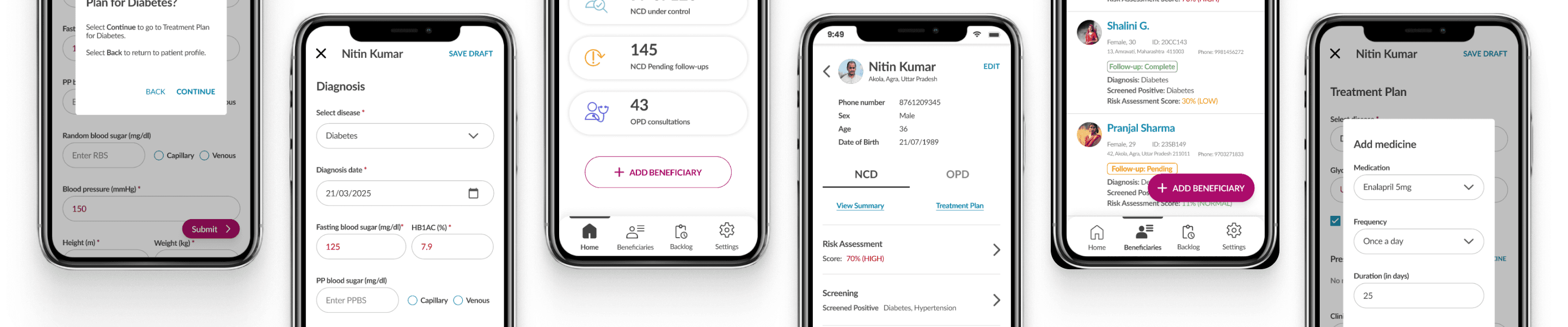
VillageNCD*
A system to treat NCDs that can be integrated into any existing infrastructure
A system to treat NCDs that can be integrated into any existing healthcare infrastructure
Metrics
MVP deployed in 100+ villages
CSAT scores of 80+
Potential adopters in African nations, USA and India
Team (20+)
Design Lead (me)
Product Management
Front-end Developers
Back-end Developers
External Contractors
Timeline
18 months
Tools
Adobe XD
Figma
Adobe Illustrator
Miro
Team (20+)
Design Lead (me)
Product Management
Front-end Developers
Back-end Developers
External Contractors
Timeline
18 months
Tools
Adobe XD
Figma
Adobe Illustrator
Miro
Metrics
MVP deployed in 100+ villages
CSAT scores of 80+
Potential adopters in African nations, USA and India
health technology
accessibility
low-resource settings
low-digital literacy
access-based system design
*VillageNCD is a replication of the original project (under NDA) that I led at Dell Technologies.
What is the project about?
Non-Communicable Diseases
Definition and Causes
An NCD is a disease that is not transmissible directly from one person to another.
Unlike most infectious diseases, NCDs could be caused as a result of genetic, physiological, environmental and behavioural factors.
Types of NCDs
Cardiovascular diseases (heart attacks, strokes, etc)
Cancers
Chronic Respiratory Diseases (asthma, chronic obstructive pulmonary disease or COPD, etc)
Diabetes
Hypertension
The Worrying State of NCDs
The numbers are scary!
41 Million
Deaths caused by NCDs
worldwide every year
67%
of adults with hypertension live in low- and middle-income countries
1.5 Billion
adults live with hypertension in 2025
1 in 5 people
suffers from an NCD and might not even know it - an invisible epidemic
1 in 12
women die of cancer in their lifetime
589 Million
adults live with diabetes in 2025
projected to be 853 million by 2050
73%
of NCD deaths happen in low- and middle-income countries
71%
of all global fatalities caused by NCDs
9.7 Million
deaths caused by cancers in 2022
1 in 9
men die of cancer in their lifetime
In India, Dell Technologies, through a team called Digital LifeCare has been working towards fixing this NCD problem. I worked as a Product Designer - deeply passionate about the cause.
Digital LifeCare at Dell Technologies
We work with the Government of India, to digitise the Public Healthcare System with a focus on NCDs.
Our system is used by healthcare workers to assess, screen, treat and diagnose NCDs.
The Indian Public Healthcare System
The Public Healthcare System in India comprises 6 levels.
1. ASHA
Accredited Social Health Activist
2. ANM and MPW
Auxiliary Nurse Midwife and Multi-purpose Healthcare Workers
3. MO
Medical Officer
4. CHC staff
Community Health Center
5. District Hospital Staff
6. Private Hospital Staff
Continuum of Care - A suite of 6 Applications
6 applications and dashboards that can be used on mobiles, tablets and desktops
Connected by a common database
Used by:
ASHA workers
ANMs
Medical Officers
Specialists
District Administrators
Government Health Officials
6 applications and dashboards that can be used on mobiles, tablets and desktops
Connected by a common database
Used by:
ASHA workers
ANMs
Medical Officers
Specialists
District Administrators
Government Health Officials
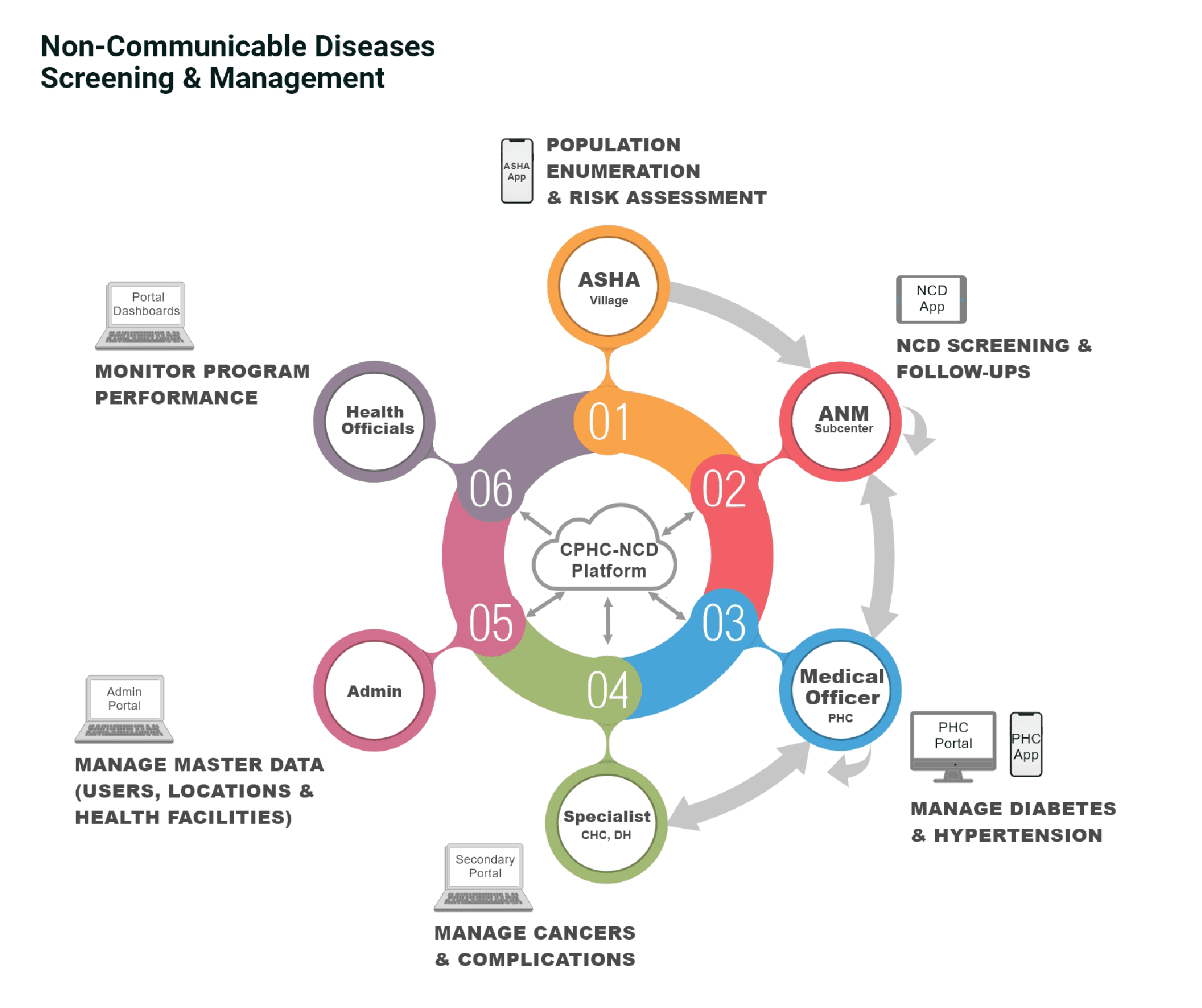
Image Credit: National Programme for prevention and control of NCDs (NP-NCD)
This project has been a resounding success!
740 million
enrolments
86 million
under treatment for diabetes
and hypertension
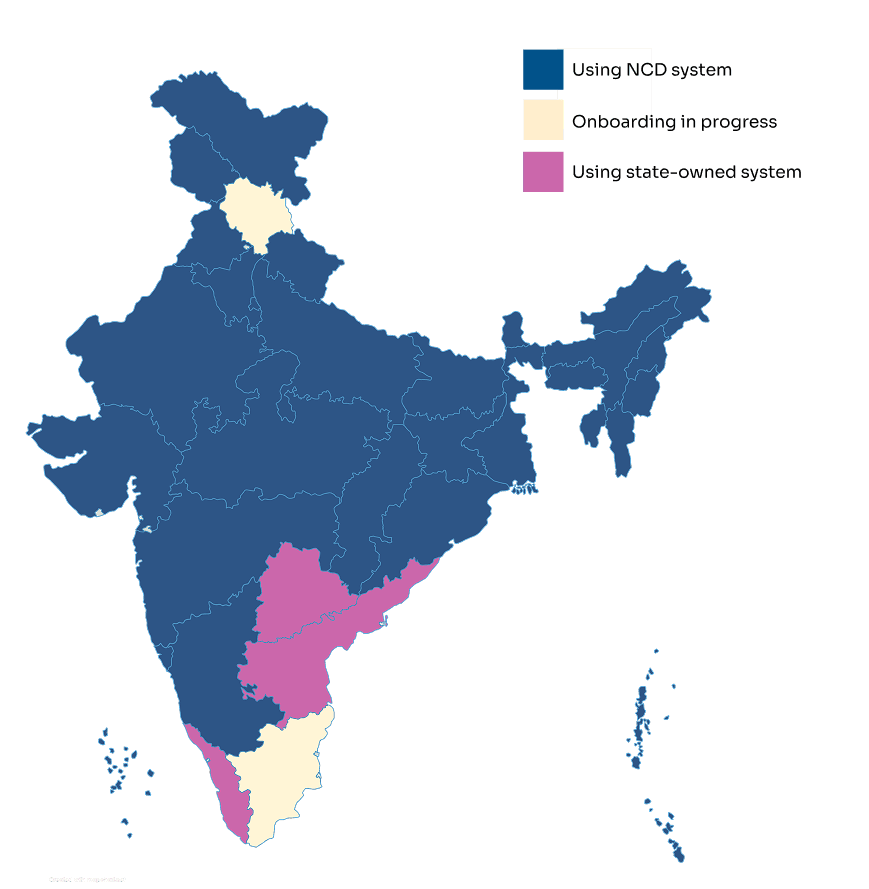
Image Credit: National Programme for prevention and control of NCDs (NP-NCD)
31
states and union territories using the system
Now that we knew the system worked, we wanted to make this impact on the global level.
So, what is VillageNCD?
A single app to be used by healthcare workers across the world, to provide preventative care for non-communicable diseases.
A system to be used by social workers, nurses and doctors to assess, screen, diagnose and treat non-communicable diseases.
One modular app that changes based on the user.
Social Workers have a different job and data-needs than Medical Officers.Easily customisable to any healthcare system globally
Clear, simple, inoffensive and culture-agnostic visual design
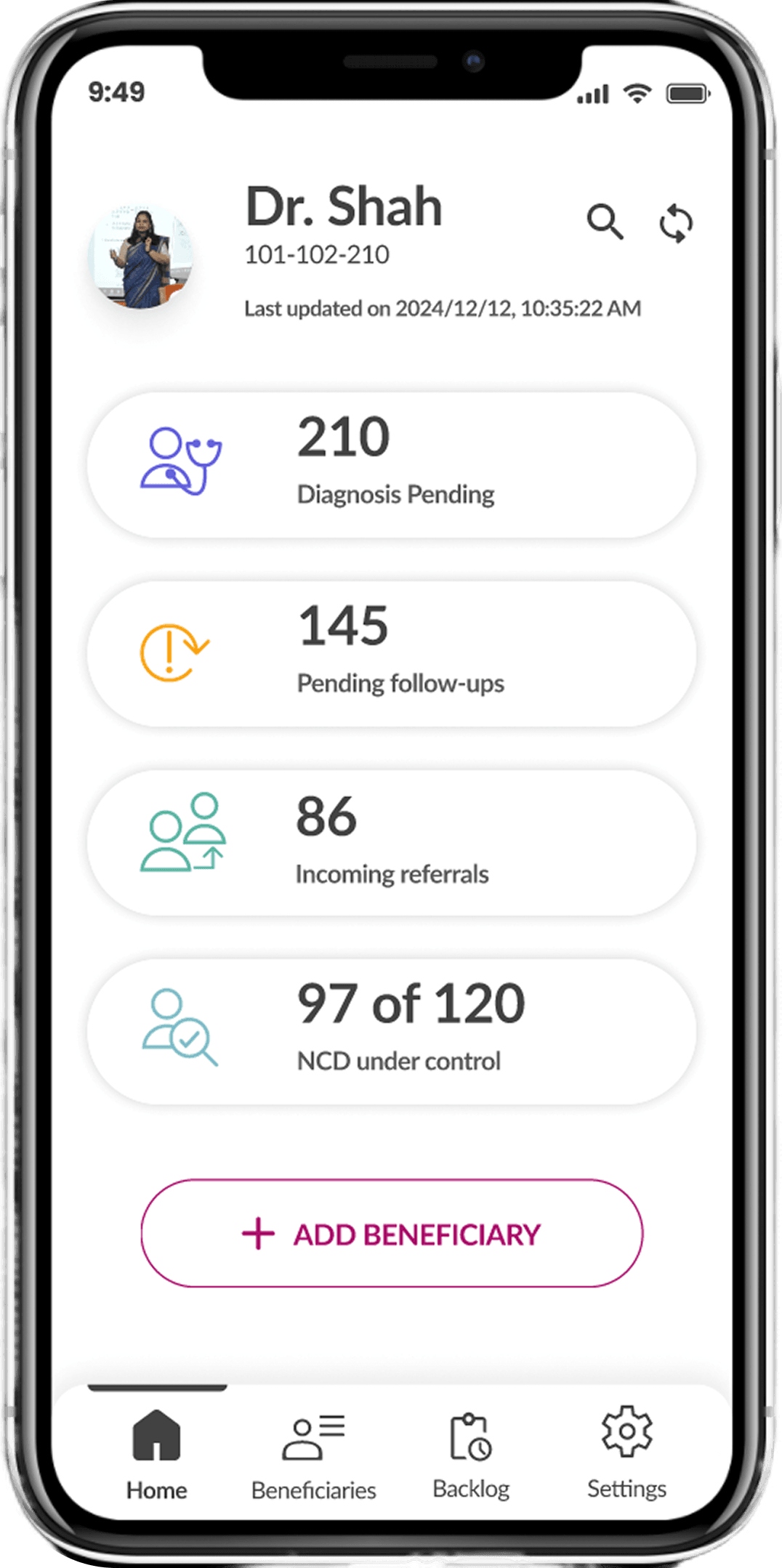
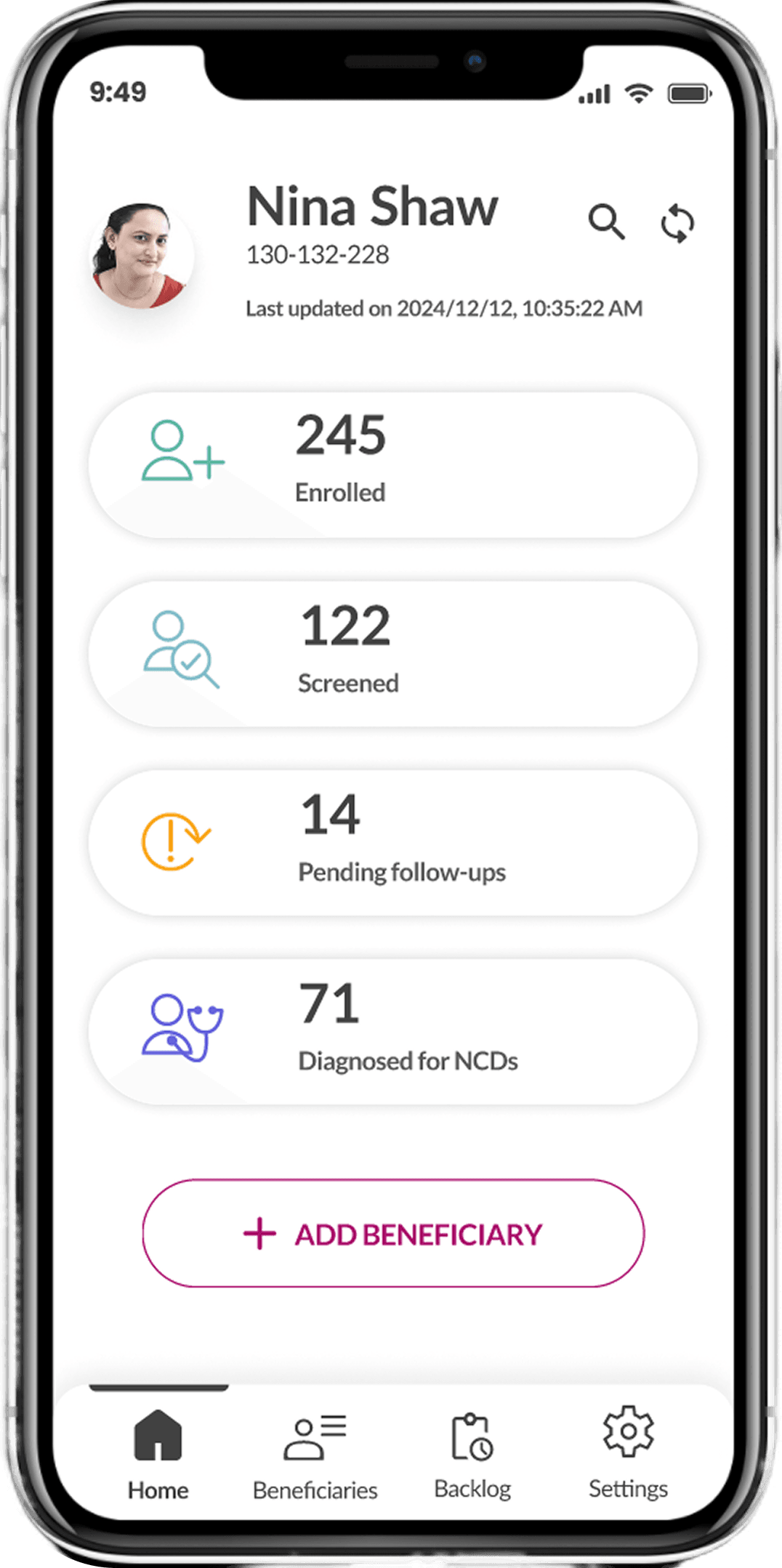
A doctor's dashboard
A social-worker's dashboard
Why did we make specific decisions?
The first MVP
Why was our first iteration based on the Indian Healthcare System?
Easily accessible resources for user research and testing.
Deep knowledge of user needs, digital literacy rates, resource availability and other constraints.
Access to experienced Subject Matter Experts.
Quick turnaround, since we already had an existing system to loosely model it on.
We needed a successfully functioning MVP to gain and maintain interest of interested parties.
Recruiting Subject Matter Experts
We recruited SMEs to speak with. Their expertise was among the following areas:
Doctors and General Practitioners with a private practice.
Doctors and Medical Officers in the Public Healthcare Sector.
Heads and members of NGOs that work in the healthcare sector.
Field officers who constantly interact with and collect feedback from the healthcare workers using the system..
Longstanding members of Digital LifeCare who know how the digital and on-ground system works
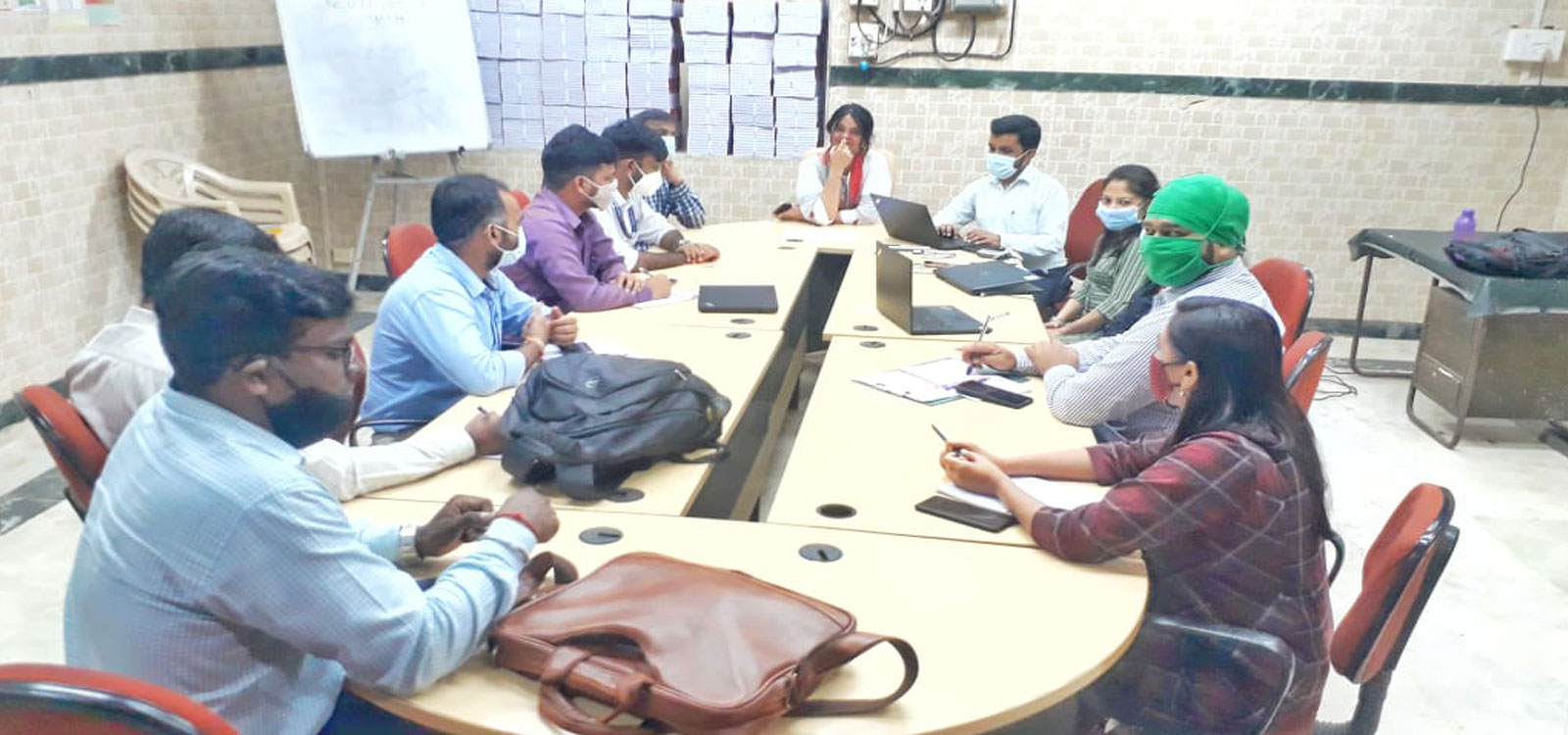
Image Credit: National Programme for prevention and control of NCDs (NP-NCD)
Primary Insights:
Let the doctors be in control at all times.
Make the form free-entry wherever possible
Don’t suggest treatments to doctors, they already know what needs to be done
Prepopulated suggestions in search results are useful
Reduce data-entry cognitive load.
The system should put the patient and patient data first
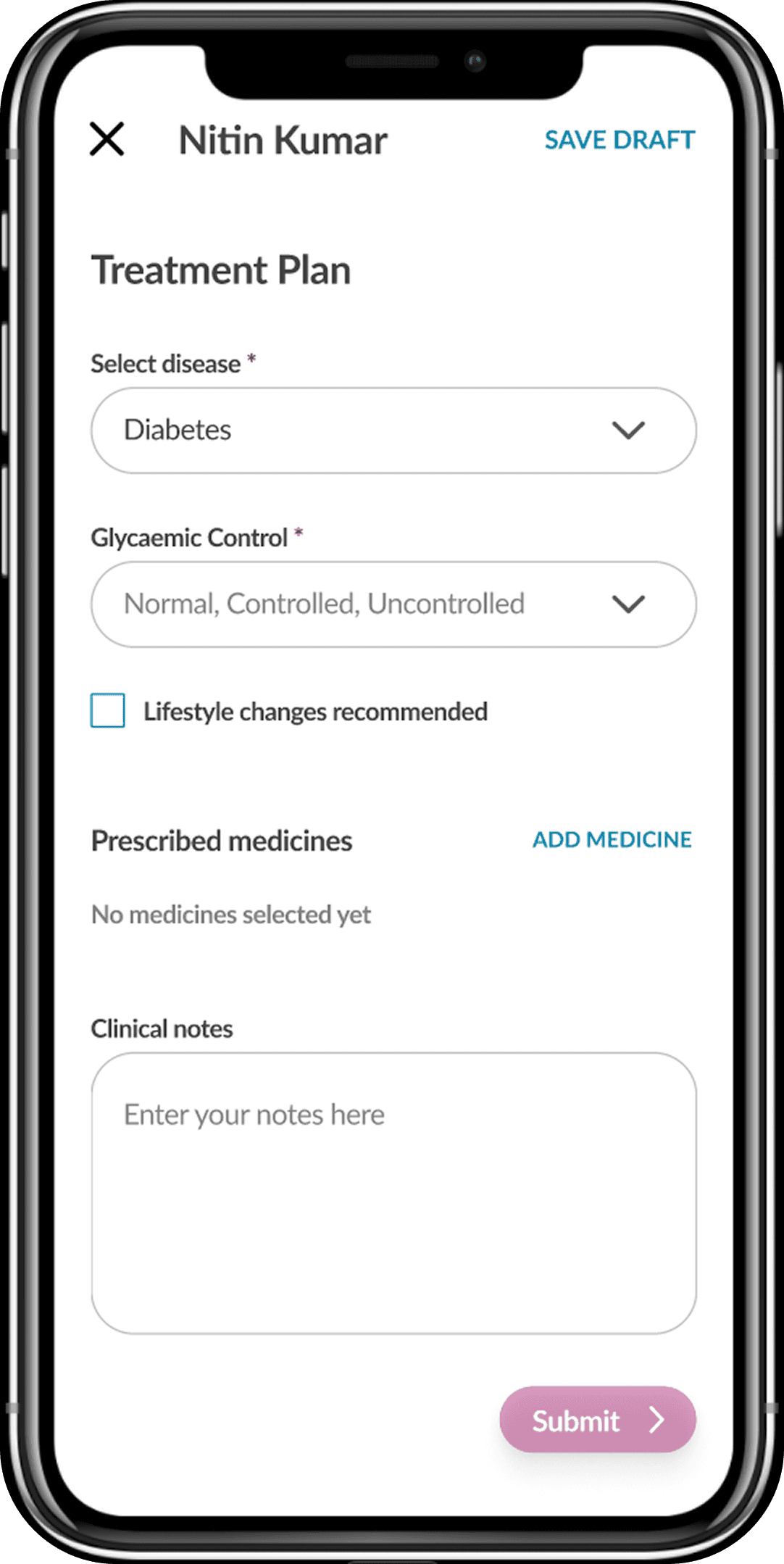
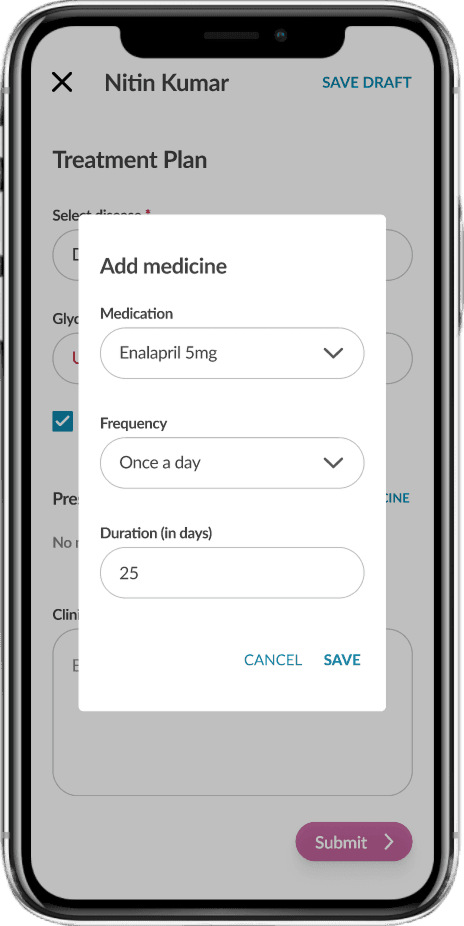
Make the forms free-entry e.g., Clinical Notes
Short forms, clear labels for low cognitive load
Recruiting Participants for User Research
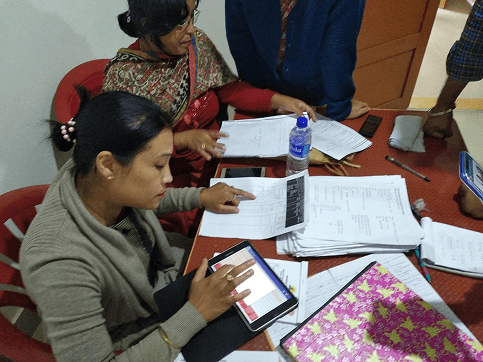
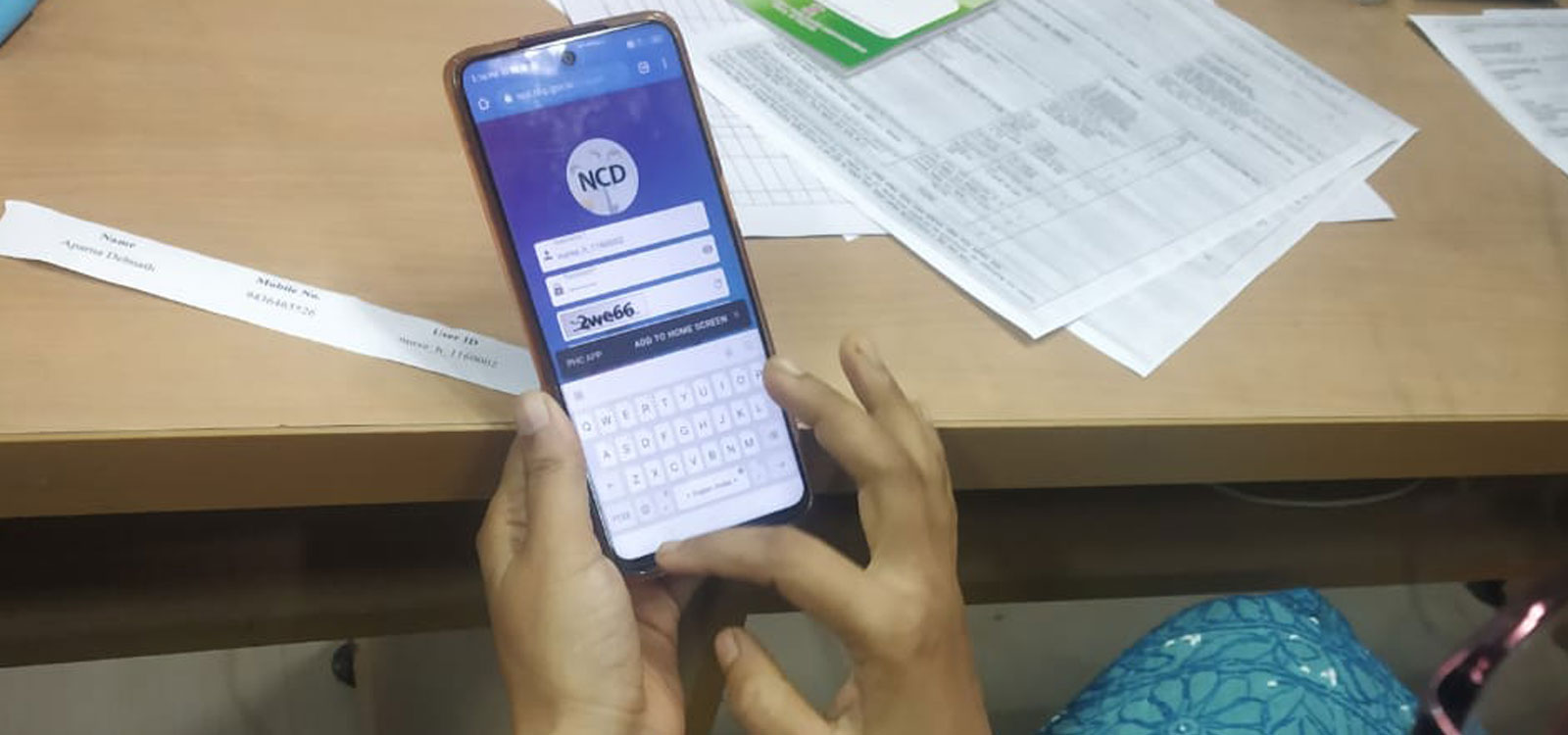
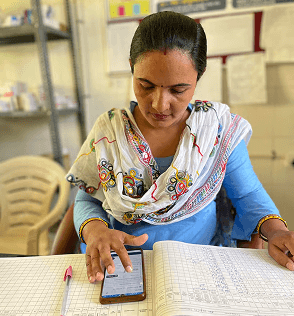
Image Credits: National Programme for prevention and control of NCDs (NP-NCD)
Frequent contextual inquiries were conducted every quarter with the aim to understand user pain points in the current system, to know what not to do in VillageNCD.
The field-research team spoke regularly with:
Medical Officers in Primary Health Centres
ANMs in Subcentres
ASHA workers in the villages they work for
Primary Insights:
Low-resource settings with poor connectivity, they need offline support.
Multiple patients treated at a time, the app needs to add minimal cognitive load.
Simple language and accurate medical terms to combat language barriers and semantic misunderstandings
Different levels of healthcare workers have different functionality requirements.
Searching needs to be quick and flexible. Workers at different levels search differently
ASHA workers: Know their patients. They use names.
MOs: Lot of patients. They use mobile numbers.
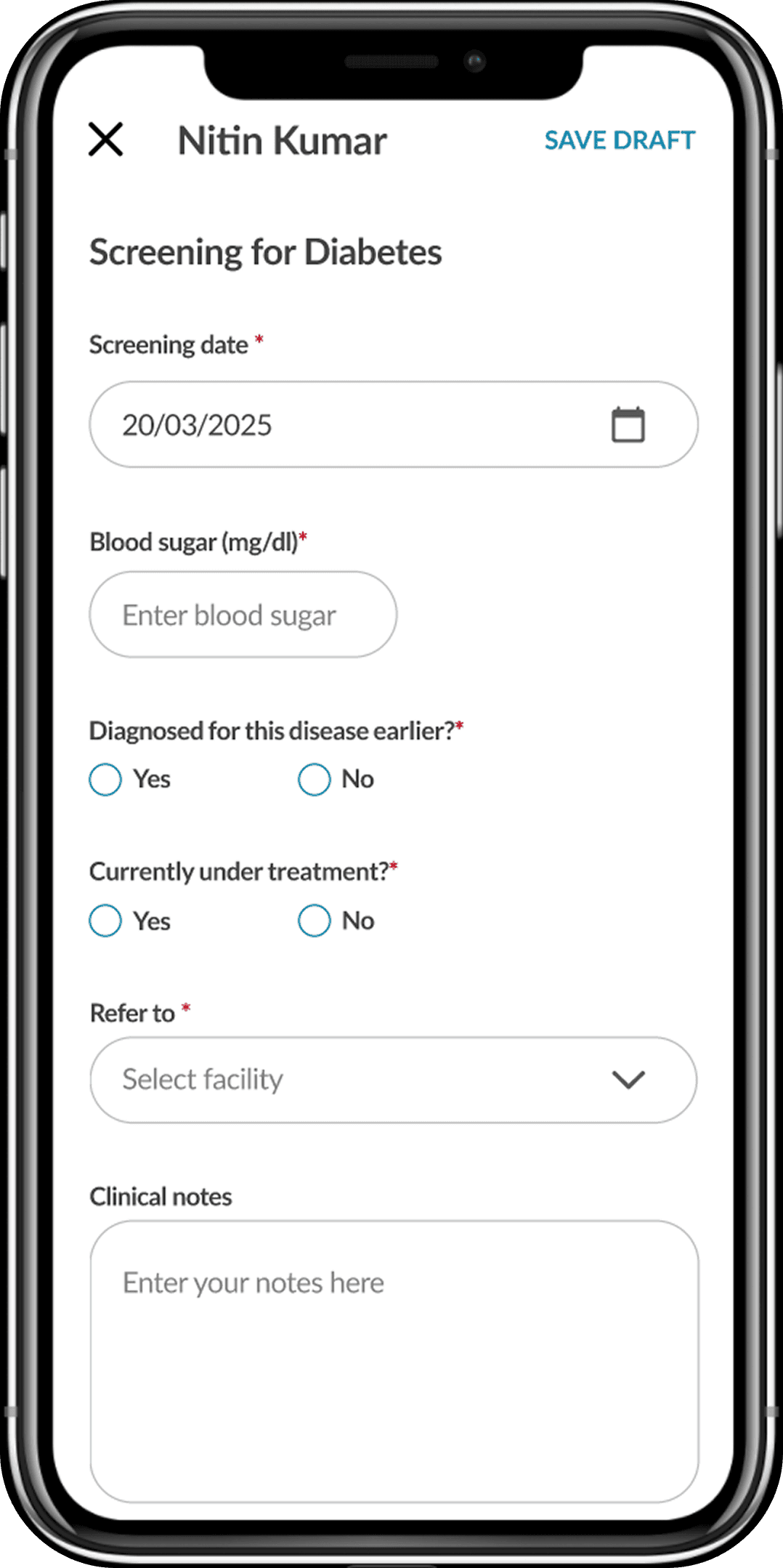
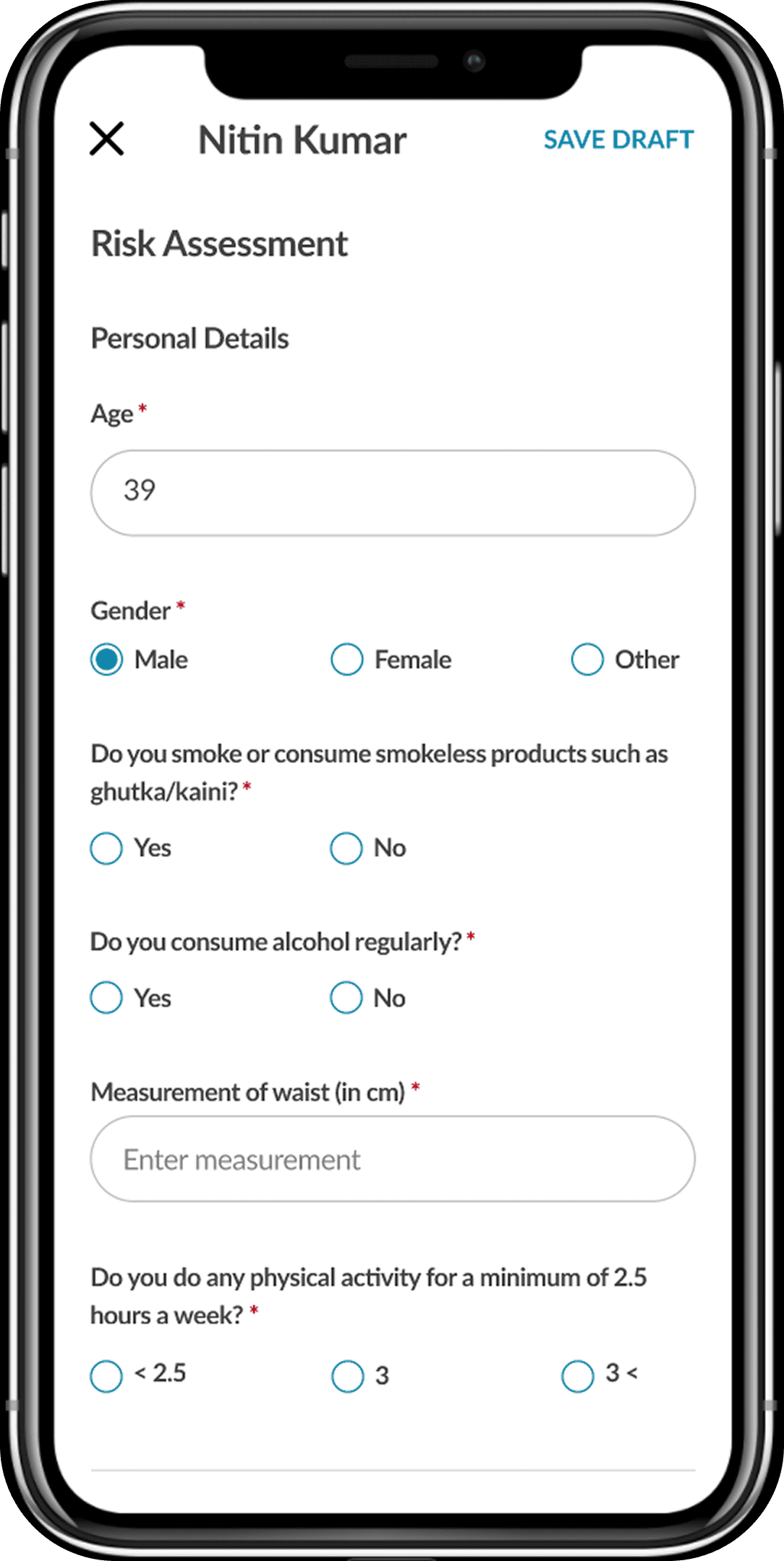
Screening form for ANMs/CHOs
Risk assessment for social workers
Why go digital?
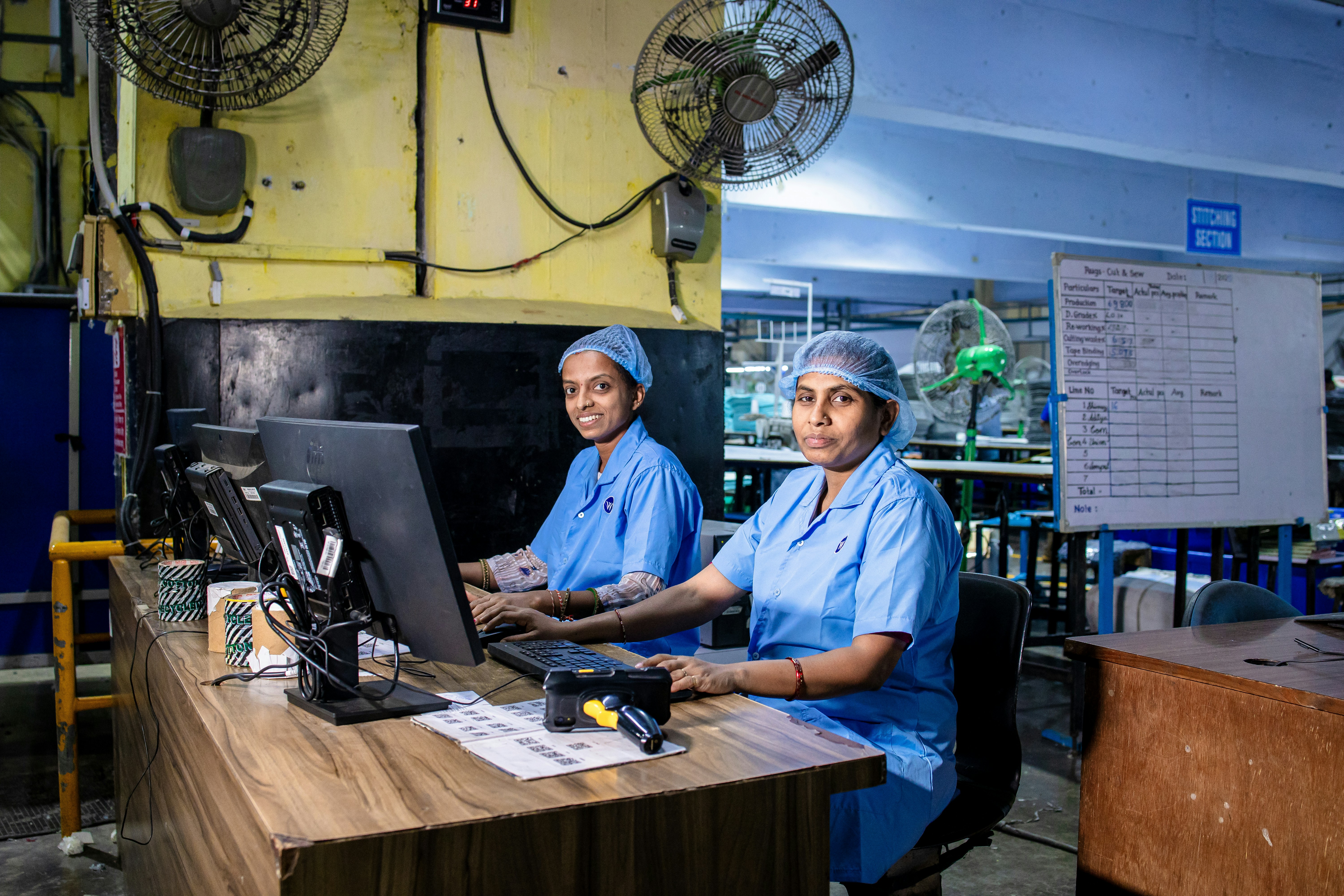
Based on our interviews in the field, the last thing healthcare workers wanted was an app getting in the way of their daily tasks. However, the government's push for digital is warranted, and the benefits outweigh the inconvenience caused.
Paper filing and management is complicated.
Physical records get lost or deteriorate over time.
Patients face difficulties managing documents they don't understand.
The system has multiple levels - it's difficult to keep track of records created at each level
Hundreds of patients come daily, making a digital system more convenient.
A lot of things are done digitally now, anyway
So, why did we primarily make our decisions?
Different levels of healthcare workers have different UX needs.
Healthcare workers treat multiple patients who need full attention. The app needs to add minimal cognitive load.
The patient is at the centre of everything. The app is used by healthcare workers, but is for the patient's benefit.
How did we go about doing this?
Personas
For the sake of simplicity, I used 3 personas for VillageNCD.
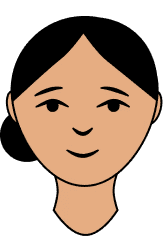
Social Worker
Lives in the villages with the people she helps
Creates awareness about all NCDs and risks
Enrols people into the system for screening
Reminds patients about follow-ups
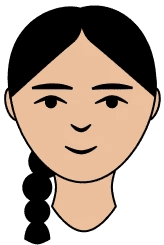
Community Health Officer
Works at a Subcenter
Handles smaller cases and manages follow-up care
Screens new patients for NCDs
Refers patients to higher facilities if needed
Medical Officer
Works at the Primary Health Center
Diagnoses and treats patients for most NCDs
Schedules and conducts follow-ups
Refers patients to higher facilities if needed
Task Flows and User Interactions
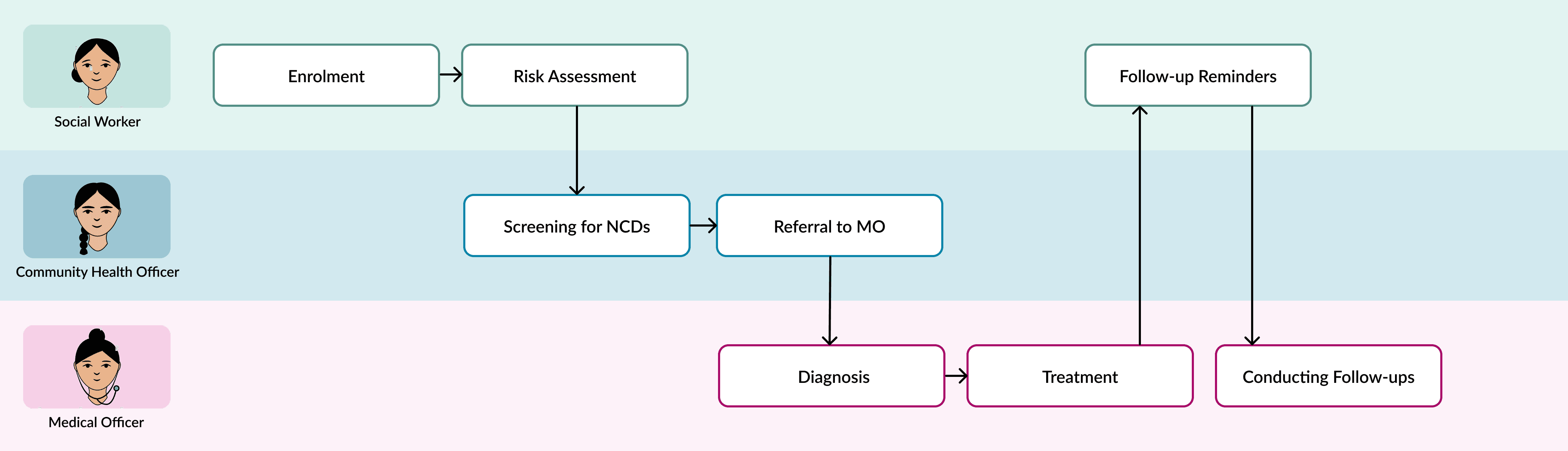
The main tasks of a Social Worker, Community Health Officer and Medical Officer, and their interdependence.
Final Prototypes
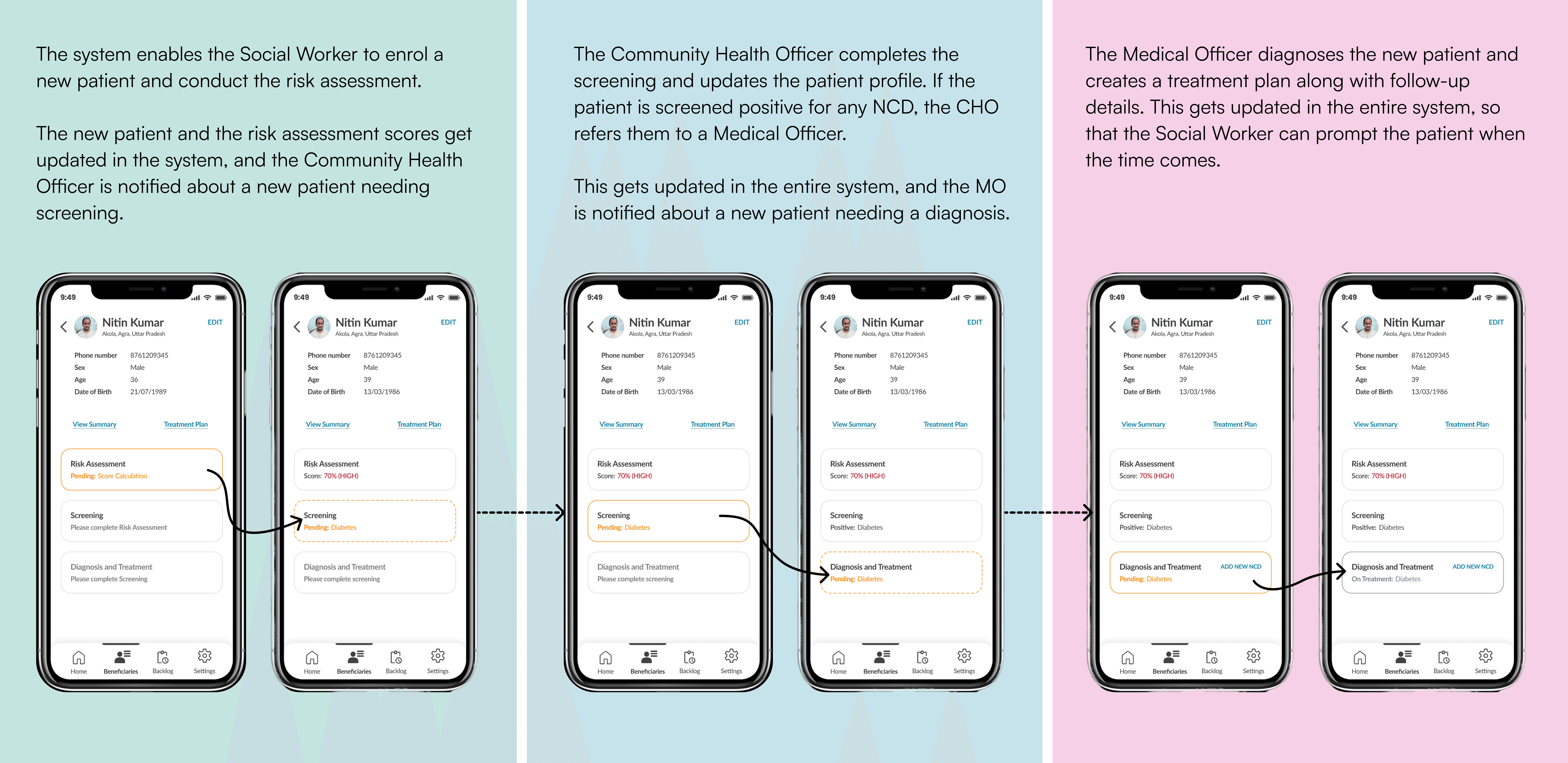
Social Worker
Step 1: Enrolment
Social worker fills an Enrolment Form with personal details about the beneficiary (patient) to build an initial profile.
Step 2: Risk Assessment
Social worker asks about and fills in details about beneficiary's lifestyle, habits, family history and any other factors that could put them at risk for an NCD.
Community Health Officer
Step 3: Screening and Referral
The Community Health Officer runs basic tests on the patient, such as checking for blood sugar levels. She then refers the patient to a MO and updates the patient profile..
Medical Officer
Step 4: Diagnosis
Based on Screening results, the Medical Officer runs tests to diagnose the patient with the disease (in this case, diabetes) and updates the patient's profile with the details.
Step 5: Treatment
If the patient is diagnosed with an NCD, the medical officer "writes a prescription" using the app along with follow-up timeline that will be reflected in both the CHO's and Social Worker's apps.
Important UX and Visual Design Decisions
Connected system, common database
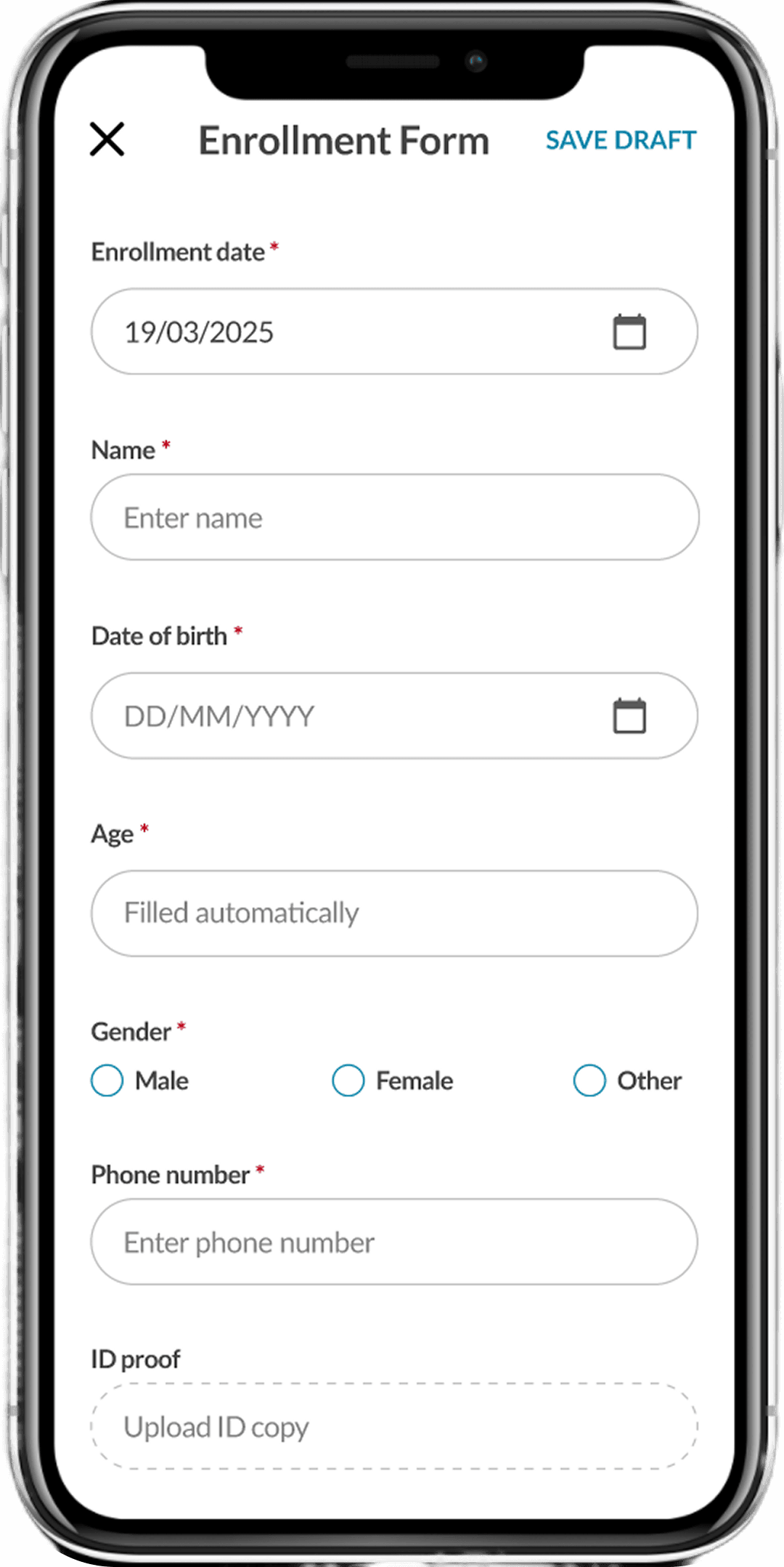
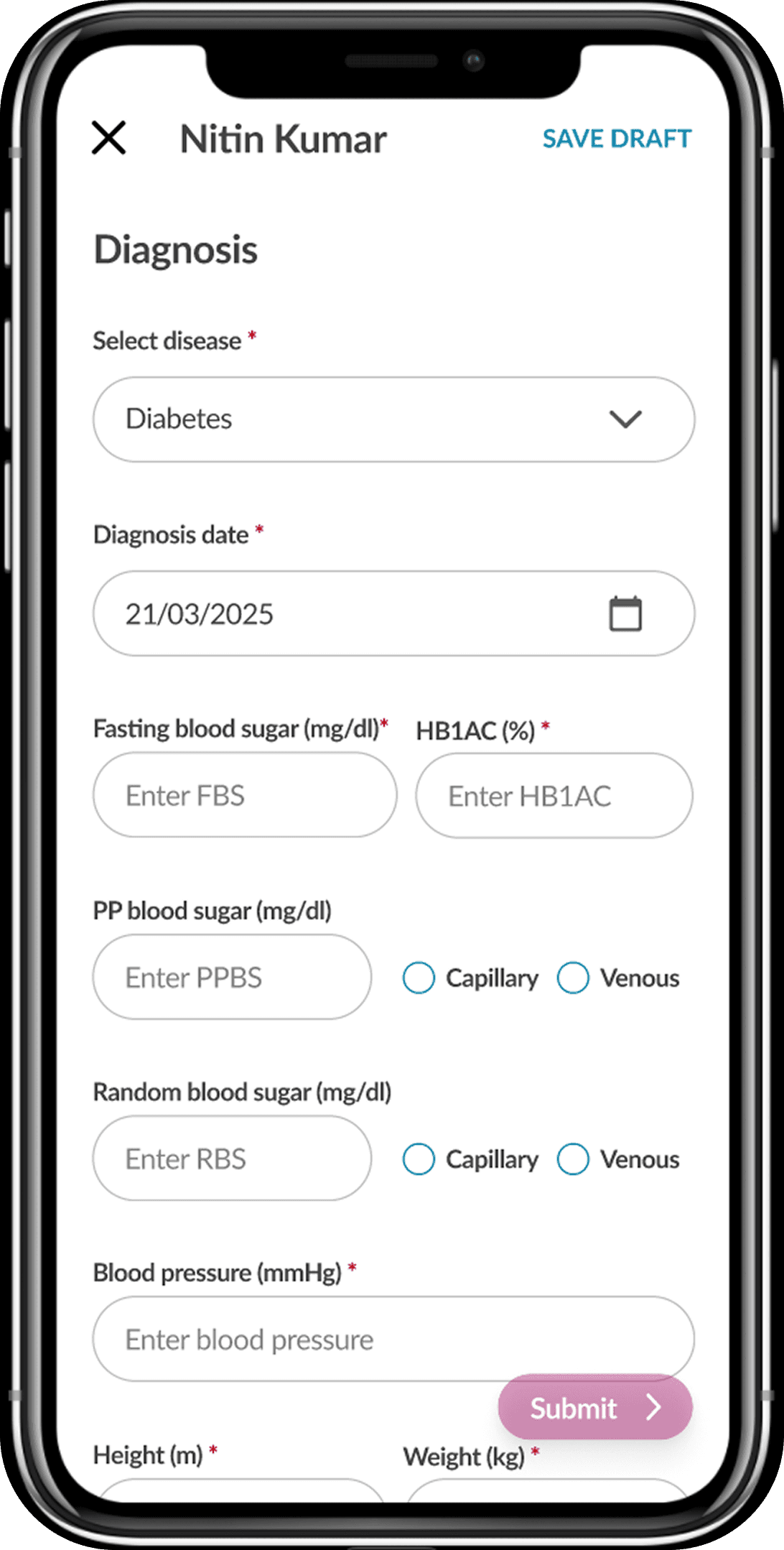
Simple forms and data entry
Most of this application involves collecting data while talking with the patients.
short, unobtrusive, clear forms, so that the healthcare worker's attention is not unnecessarily divided
CTAs that are consistent and prominent, encouraging muscle memory
Mandatory fields highlighted
Persistent disabled submit button until everything necessary is filled
Visual Design
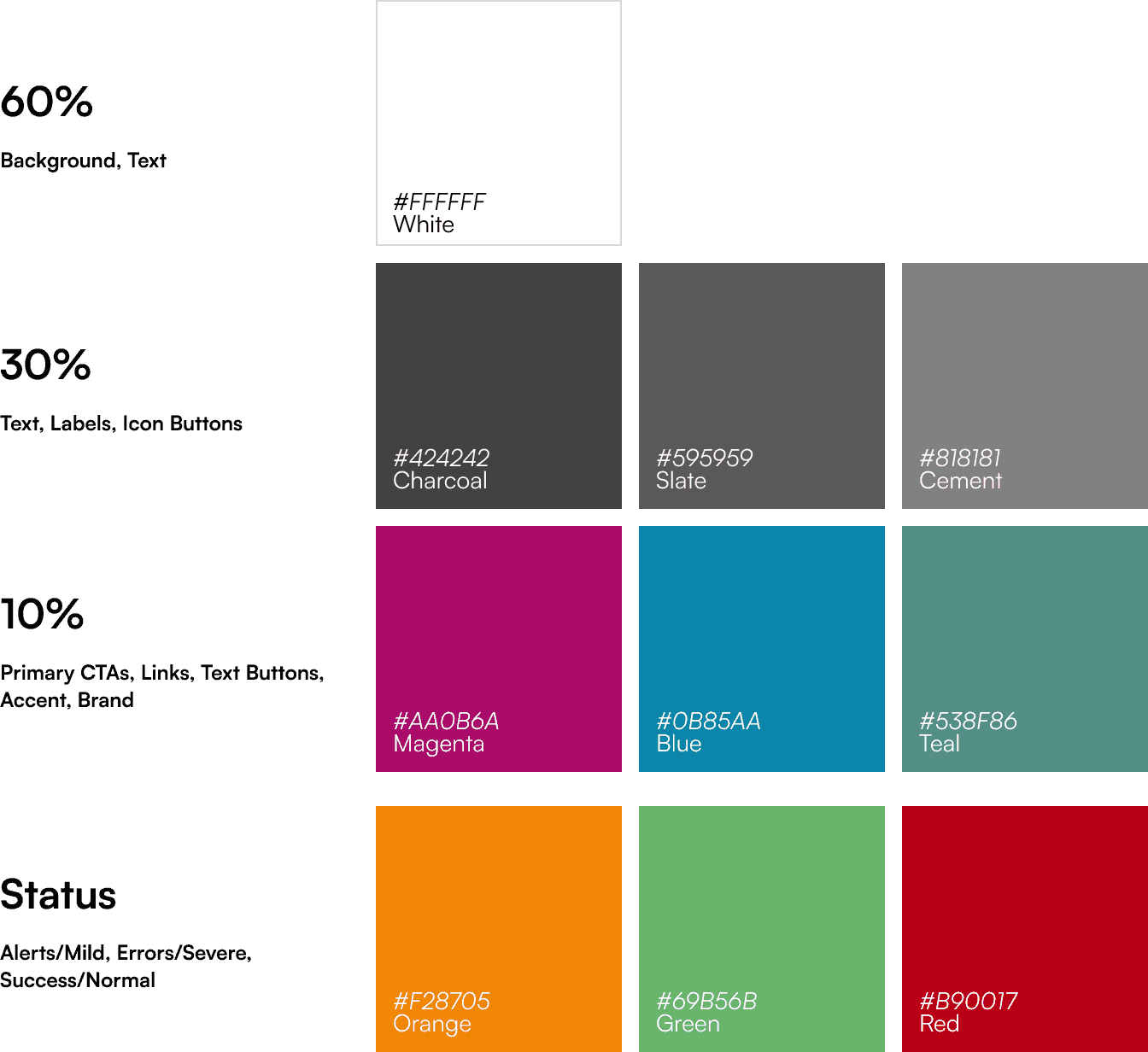
Colour
Considerations while choosing colours:
culturally agnostic, no socio-political implications globally
new, fresh colours while still representing a medical application
easily navigable visual hierarchy
Typography
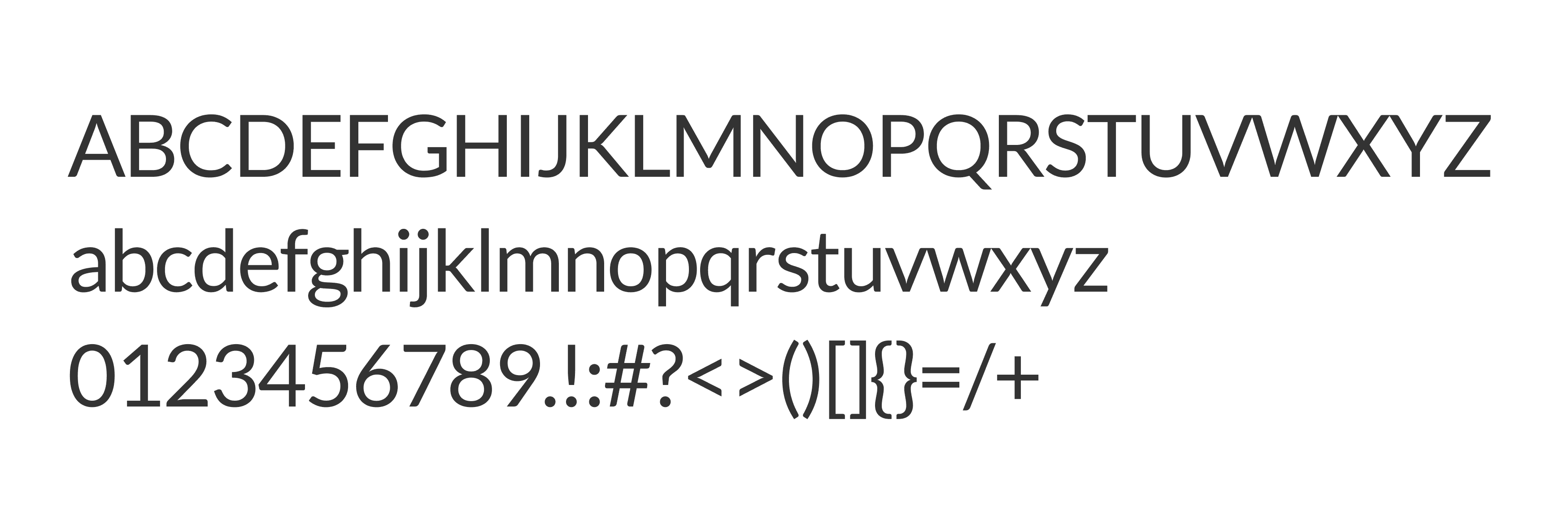
We chose the typeface Lato.
Considerations while choosing a typeface:
easy to read even at smaller font sizes
affords quick skimming
can be easily read in any Latin script based language
versatile and variable
Iconography
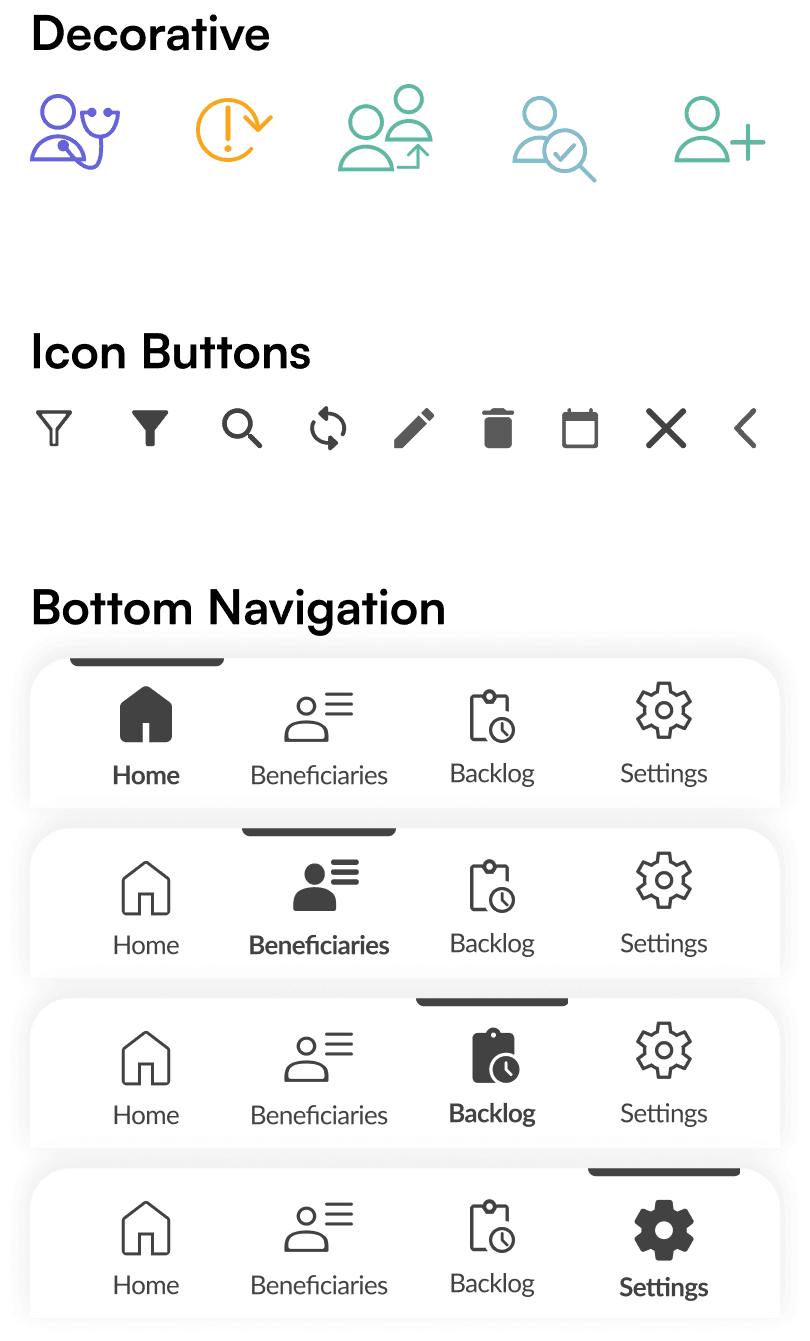
We used a mixture of native Material and custom icons depending on the use-case.
Considerations while choosing icons:
descriptive without sacrificing legibility
lined icons, easily scalable
aesthetically aligned to overall visual design
Outcomes
First MVP tested in over 100 villages in Northern India, with CSAT scores of 80+
Conversations with potential adopters in Africa, and interested parties in the United States and multiple NGOs in India
Overwhelmingly positive feedback from leadership in Dell Digital Design, and Digital Lifecare
As a young designer, leading alongside a team of senior PMs and developers had a steep learning curve. I have grown a lot through this project, and learnt important lessons about leadership, respect and mutual trust.
Ananya Kaipa © 2025.


This case study has been designed to be viewed on a larger screen, for now.
This version of it is under construction! Stay tuned :)
Ananya Kaipa © 2025.
This case study has been designed to be viewed on a larger screen, for now.
The mobile version of it is under construction! Stay tuned :)
Ananya Kaipa © 2025.